

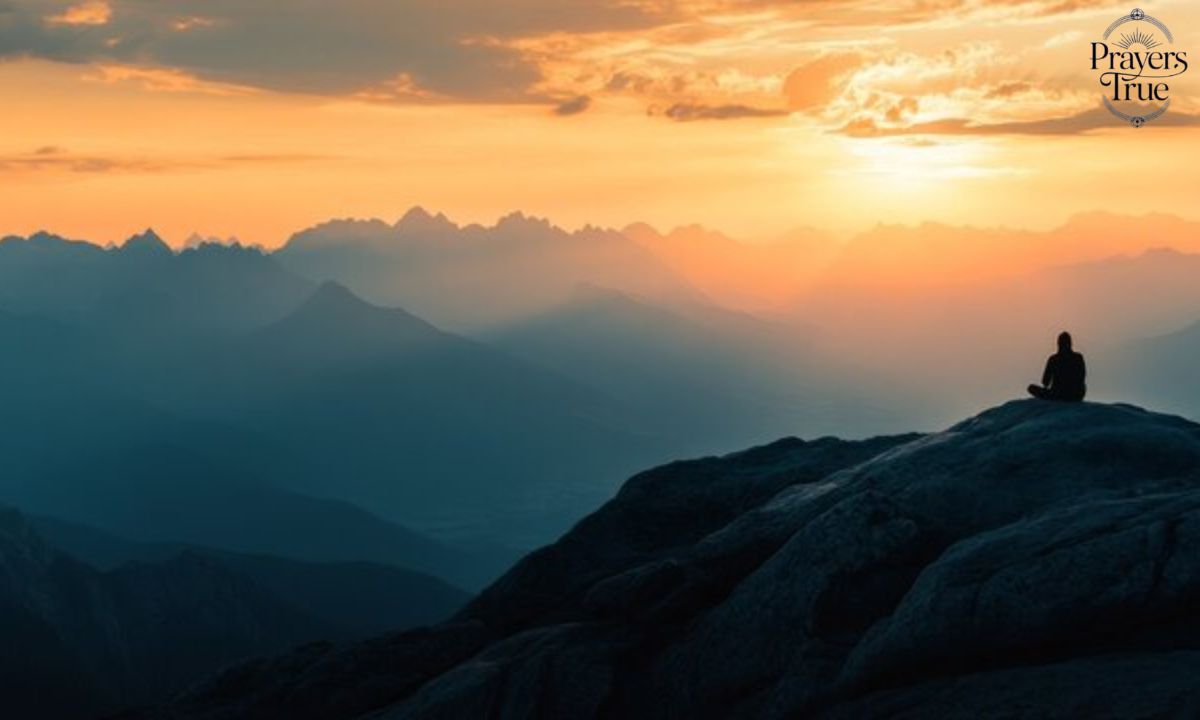
A Prayer Mountain is a special place—often a hill, mountain, or quiet elevated area—where people go to spend time in deep prayer, meditation, and spiritual reflection. It is believed that being closer to nature helps believers disconnect from daily distractions and focus more fully on their relationship with God. Many people choose Prayer Mountains for personal prayer retreats, fasting, and seeking guidance or peace during important life decisions.
In many Christian traditions, mountains are seen as sacred spaces where individuals can encounter God more deeply, just as prophets and spiritual leaders did in the Bible. Whether natural or symbolic, a Prayer Mountain represents a place of solitude, faith, and spiritual renewal.
The Spiritual Meaning of Prayer Mountains

A prayer mountain is a sacred elevated place — literally a mountain, hill, or high ground — set apart for intense, focused prayer, fasting, and spiritual retreat. The concept is both ancient and universal, appearing across many faith traditions under different names, such as 기도원 in Korean or Dobaek in Amharic.
Mountains hold deep spiritual significance throughout sacred history. Mount Sinai was where Moses encountered God and received the Ten Commandments. Mount Carmel was where Elijah prayed and called down fire from heaven. The Mount of Olives was where Jesus frequently withdrew to pray, and Mount Moriah was where Abraham offered Isaac and later the site of Solomon’s Temple. The pattern across all these accounts is unmistakable — God meets humanity in high places.
The symbolism of height is rich and multilayered. Mountains physically lift a person above the noise and distraction of ordinary life, and this elevation carries a spiritual meaning: detachment from the earthly and a turning of the whole self toward the divine. In virtually every religious tradition, height represents nearness to God or the sacred realm. To climb a mountain is therefore an act of seeking — a bodily expression of the soul’s longing to draw closer to its source.
There is also a dimension of humility in the prayer mountain. Mountains can be harsh, exposed, and demanding. To go to such a place is to strip away comfort and convenience, placing oneself in a posture of complete dependence on God. Mystics and spiritual writers across traditions have called mountains “thin places” — locations where the boundary between heaven and earth becomes permeable, where seekers go expecting God to speak, reveal, and transform. In the language of spiritual warfare, the high ground also carries tactical meaning: intercessors who “hold the high ground” in prayer are seen as standing in the gap for communities, nations, and generations.
The contemporary prayer mountain movement is most powerfully associated with Korean Christianity, particularly through the Osanri Prayer Mountain established in 1973, which became a global model. Pilgrims there would enter small individual prayer grottos, fast for extended periods — sometimes 3, 7, 21, or even 40 days — and pray through the night, all in expectation of spiritual breakthrough: healing, deliverance, and divine direction. This model spread widely across Africa, Latin America, and Southeast Asia, giving rise to hundreds of prayer mountains around the world.
Biblical Foundation of Prayer Mountains
A prayer mountain is a sacred elevated place — a mountain, hill, or high ground — set apart for intense prayer, fasting, and spiritual retreat. The concept is ancient and universal, appearing across many faith traditions around the world.
Mountains carry deep spiritual significance throughout sacred history. Moses encountered God on Sinai, Elijah prayed on Carmel, and Jesus regularly withdrew to the Mount of Olives. The pattern is consistent: God meets humanity in high places.
The symbolism of height is rich. Elevation represents detachment from earthly noise and a turning of the whole self toward the divine. To climb is to seek — a bodily expression of the soul’s longing to draw near to God. Mountains are also “thin places,” where the boundary between heaven and earth grows permeable and encounter becomes possible.
The modern prayer mountain movement is most strongly associated with Korean Christianity, spreading from the Osanri Prayer Mountain in 1973 to hundreds of similar sites across Africa, Asia, and Latin America. Pilgrims fast, pray through the night, and wait in expectation of healing, direction, and spiritual breakthrough.
Beyond any physical location, the greatest prayer mountain is an interior one — the still center of the soul where a person learns to dwell in God’s presence amid ordinary life. The mountain always points beyond itself. It is not the destination. It is the invitation.
Why People Visit Prayer Mountains

People visit prayer mountains for many reasons, but at the heart of every journey is a single impulse: the need to draw near to God without distraction. Ordinary life is crowded with noise, obligation, and busyness, and the prayer mountain offers a deliberate break from all of it — a physical act of stepping away in order to step closer.
Many come carrying burdens too heavy for everyday prayer. A desperate illness, a broken marriage, a wayward child, a decision with no clear answer — these are the kinds of needs that drive people to seek a deeper, more sustained encounter with God. The mountain becomes a place of crying out, of laying everything down, of refusing to leave without an answer.
Others come not in crisis but in hunger. They are spiritually dry, feeling distant from God, and longing for renewal. The extended time of fasting, silence, and focused prayer is meant to strip away the layers that have built up and restore the soul to a place of freshness and sensitivity to the Holy Spirit.
Intercession is another powerful motive. Many visitors come not primarily for themselves but on behalf of others — praying for their nation, their church, their community, or specific individuals in need. The prayer mountain is seen as a place of spiritual authority, where sustained intercession can break through in ways that ordinary prayer cannot.
Benefits of Praying on a Mountain
One of the most immediate benefits of praying on a mountain is the removal of distraction. The higher you climb, the further you get from the noise of daily life — the notifications, the responsibilities, the endless demands of people and screens. In that quiet, the mind settles and the heart opens in ways that are difficult to achieve in ordinary surroundings.
The physical act of climbing is itself spiritually significant. There is something about the effort of ascent — the burning muscles, the slower pace, the dependence on each step — that prepares the soul for prayer. The body participates in the seeking, and by the time a person reaches the summit or the place of prayer, they are already in a posture of humility and intentionality.
Mountains also produce a powerful sense of perspective. Standing above the landscape, looking out over creation, a person naturally feels both small and held — aware of their own limitations and equally aware of the greatness of God. This shift in perspective loosens the grip of worry and pride, making genuine worship and surrender much easier.
Extended time on a prayer mountain, especially combined with fasting, is believed to sharpen spiritual sensitivity. Many who have spent days in such an environment report that prayer becomes less of an effort and more of a natural flow, that Scripture comes alive in fresh ways, and that the presence of God feels tangible and near.
Perhaps the deepest benefit is what people carry back down with them. A mountain prayer experience often produces a clarity, a settledness, and a renewed sense of purpose that sustains a person long after they return to ordinary life. They descend changed — not because the mountain itself holds power, but because of what happened between their soul and God while they were there.
Prayer Mountain Etiquette and Guidelines

Coming to a prayer mountain begins before you arrive. The journey itself is part of the preparation, and many seasoned visitors recommend spending time in quiet reflection or worship during the travel, allowing the heart to transition from the pace of everyday life into a spirit of reverence and expectation. Arriving with intention matters.
Silence is one of the most sacred values of a prayer mountain environment. Many sites maintain designated quiet zones where talking is either discouraged or forbidden entirely. This silence is not merely a rule but a gift — it protects the atmosphere of prayer for everyone present and creates the conditions in which God can be heard. Visitors are expected to guard it carefully, keeping voices low even in permitted areas and avoiding unnecessary conversation.
Modesty in dress is generally expected, reflecting the understanding that a prayer mountain is a holy place set apart for seeking God. Loud colors, revealing clothing, or anything that draws attention to the self rather than to God is typically discouraged. The outward appearance is seen as an expression of the inward posture — coming before God with simplicity and humility.
Fasting is common on prayer mountains, and many sites have specific guidelines around the use of their facilities for this purpose. If you are fasting, it is wise to inform someone and to know your physical limits. If you are not fasting, eating should be done quietly and privately, out of respect for those who are.
Mobile phones and electronic devices are ideally left behind or kept completely silent. The culture of a prayer mountain is one of withdrawal from the world, and the presence of screens — even silent ones — can subtly pull the mind back into the very distraction the mountain is meant to cure.
Finally, respect for others in their moments of prayer is essential. People come to prayer mountains carrying deep and often painful burdens. You may encounter someone weeping, praying aloud, or lost in worship. The right response is simply to give them space, to pray for them silently if moved to do so, and to remember that every person on the mountain is there because they need God — just as you are.
Frequently Asked Questions
What is a Prayer Mountain?
A Prayer Mountain is a quiet, often elevated place where people go to pray, meditate, and seek spiritual connection with God away from daily distractions.
Do I need an actual mountain to pray?
No, you don’t need a real mountain. Any quiet place where you can focus deeply on prayer can serve the same purpose.
Why do people go to the Prayer Mountains?
People go for peace, spiritual renewal, guidance, fasting, and to strengthen their relationship with God.
Is Prayer Mountain only for Christians?
While it is commonly used in Christian traditions, people of different faiths may also use similar places for meditation and prayer.
What should I bring to a Prayer Mountain?
Usually, people bring a Bible, notebook, water, and sometimes food if they plan to stay long hours or fast.
How long do people stay on a Prayer Mountain?
It varies—some stay for a few hours, while others stay overnight or for several days depending on their spiritual purpose.
Is fasting required at a Prayer Mountain?
Not always. Fasting is optional and depends on personal spiritual goals or religious practices.
Can I go alone to a Prayer Mountain?
Yes, many people go alone for personal reflection, but some prefer group prayer for support and fellowship.
What should I pray for on a Prayer Mountain?
People pray for guidance, healing, forgiveness, strength, and answers to life challenges.
Is it safe to visit a Prayer Mountain?
Generally yes, but it’s important to choose a safe location, inform someone, and take necessary precautions.
Conclusion
A Prayer Mountain is more than just a physical place—it is a spiritual experience where individuals step away from noise and busyness to connect deeply with God. Whether on a real mountain or in a quiet corner of your home, the true essence lies in sincerity, faith, and devotion. It offers peace, clarity, and renewed strength for life’s journey.

Riya is a passionate writer with 4 years of experience creating inspiring prayer blogs. She currently works at PrayersTrue.com, sharing heartfelt words that bring peace, hope, and spiritual strength to readers worldwide.