

A repentance prayer is a sincere and heartfelt conversation with God in which a person acknowledges their sins, mistakes, or shortcomings and seeks forgiveness. It is an expression of true remorse and humility, reflecting a desire to turn away from harmful behaviors and align one’s life with spiritual or moral values. Unlike casual apologies, a repentance prayer comes from deep within the heart and signifies a conscious effort to change, grow, and restore the relationship with the Divine. It serves as a powerful reminder that no matter the mistakes we have made, God’s mercy and compassion are always available to those who earnestly seek it.
Through repentance, individuals not only seek forgiveness but also find inner healing, peace, and guidance for the future. This prayer encourages reflection on past actions, accountability, and a renewed commitment to living a life of integrity, kindness, and faith. By practicing repentance, one can experience a sense of spiritual renewal and emotional relief, allowing the heart to let go of guilt and embrace hope, love, and a stronger connection with God. It is both a personal journey and a transformative act that leads to a more purposeful and meaningful life.
Repentance Prayer – What Is It?
1. God, I know I got it wrong. I’m not going to dress it up or make excuses. I’m sorry. Take this mess I’ve made and help me do better.
2. Lord, I’ve been carrying the weight of this for too long. I did it. I knew better, and I still did it. Forgive me, and help me put it down for good.
3. Father, I don’t have fancy words. I just know I strayed, and I want to come back. Please meet me here, right where I am.
4. God, I’m embarrassed to even say this out loud, but you already know. I sinned. I’m sorry. Please don’t give up on me.
5. Lord, I chose the wrong thing — again. I’m not proud of it. But I’m choosing you right now. Please forgive me and steady my feet.
6. Father, I hurt someone I love, and I hurt You too. I don’t want to be that version of myself anymore. Help me change from the inside out.
7. God, I’ve been running in the wrong direction for a while now. I’m tired. I’m turning around. Please forgive me and walk with me from here.
8. Lord, I let my pride take the wheel, and look where it got me. I’m sorry. Humble me, forgive me, and lead me somewhere better.
9. Father, I knew it was wrong when I did it. I just didn’t want to stop. Forgive me for that too — for choosing sin with my eyes wide open. Change what I want.
10. God, I’ve been pretending I’m fine, but I’m not. I’ve drifted. I haven’t been honest with you or myself. I’m sorry. Bring me back close.
11. Lord, I lost my temper and said things I can’t take back. I’m sorry. Soften my heart, forgive my words, and help me do better next time.
12. Father, I’ve been putting everything before You — my comfort, my habits, my excuses. I’m sorry for crowding you out. You deserve first place.
13. God, I feel like I’ve asked for forgiveness for this same thing too many times. But here I am again. Please don’t stop forgiving me while I keep fighting this.
14. Lord, I didn’t just slip up — I made a deliberate choice. I own that. I’m sorry. Please forgive me and give me the strength not to make it again.
15. Father, I’ve been hard-hearted lately, and I know it. I’ve ignored your nudges and done things my way. I’m sorry. Soften me. I want to be moldable again.
16. God, I carried bitterness like it was something I deserved to hold onto. It wasn’t. I’m sorry for the damage it did. Help me let it go and forgive like You forgive me.
17. Lord, I gave in to temptation when I could have walked away. I’m not making excuses — I just want to be free of this pattern. Forgive me and break the cycle.
18. Father, I’ve been dishonest — with others, with myself, and with You. That stops today. I’m sorry. Help me be someone whose word actually means something.
19. God, I wandered so far I wasn’t sure I could find my way back. But I’m here. Please forgive me and remind me that your door is always open, no matter how long I’ve been gone.
20. Lord, I don’t need to have it all figured out to ask for forgiveness. I just need to be honest. I’m sorry. I want to change. Help me — because I can’t do this without You.
Repentance Prayer in Action
1. It Starts With Honesty, Not Perfection Repentance prayer doesn’t wait until you have the right words or the right feelings. It starts the moment you stop pretending everything is fine and get real with God. You don’t need to clean yourself up before you come — that’s the whole point of coming. The prayer itself is the first step, not the last.
2. It Happens in Ordinary Moments Repentance doesn’t always look dramatic. Sometimes it’s a quiet moment in your car after you say something cruel. Sometimes it’s lying in bed at night, finally admitting what you’ve been avoiding. God isn’t only present in church or crisis — He meets you in the middle of your Tuesday, right after you blew it.
3. It Means Turning, Not Just Feeling Sorry A repentance prayer in action involves more than guilt — it involves direction. Feeling bad about something is not the same as turning away from it. Real repentance shows up in the choices that follow the prayer. It’s saying sorry with your mouth and then backing it up with your life.
4. It Rebuilds What Sin Breaks When repentance is genuine, it starts repairing things — your relationship with God, your peace of mind, and sometimes your relationships with others. It won’t always fix everything overnight, but something shifts. The weight lifts. The distance closes. Repentance is where restoration actually begins.
5. It’s Not a One-Time Event Repentance prayer isn’t something you do once and check off a list. It’s a posture — a willingness to keep returning to God whenever you drift. The goal isn’t to never need it again. The goal is to stay humble enough to keep coming back, knowing that God’s willingness to forgive never runs out before your need for it does.
The Practicals of Repentance
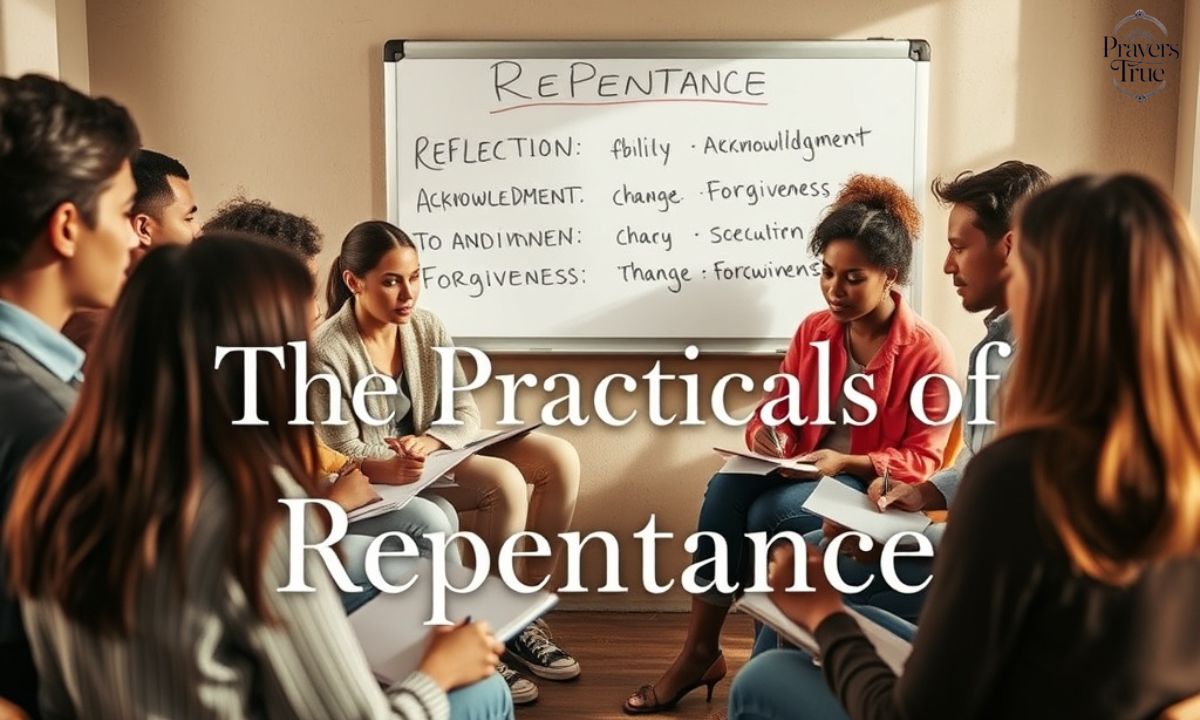
1. Admit It Out Loud One of the most practical things you can do is say it — out loud, in prayer, without softening it. Not “I made a mistake” when you know it was a choice. Not “I could have done better” when you know you flat out did wrong. Calling it what it is, before God, is where repentance gets its footing.
2. Stop Making Excuses Repentance loses its power the moment you start explaining why it wasn’t entirely your fault. Excuses and repentance cannot live in the same sentence. Practical repentance means dropping the “but” — owning your part fully, even if others played a role too.
3. Ask God Specifically Vague prayers get vague results. Instead of a general “forgive me for everything,” get specific. Name what you did. Name who it affected. Name the pattern you want broken. The more honest and specific your prayer, the more room you give God to work in the exact place that needs it.
4. Make It Right Where You Can Sometimes repentance requires action beyond prayer. If you hurt someone, apologize. If you took something, give it back. If you damage someone’s reputation, correct it. Practical repentance doesn’t just talk to God about the wrong — it takes real steps to address it in the real world.
5. Remove the Temptation If you keep falling in the same place, stop walking past it. Practical repentance means making changes to your environment, habits, and routines that make it harder to repeat the same sin. Delete the app. End the conversation. Change the route. Repentance that doesn’t adjust the conditions is just wishful thinking.
6. Tell Someone You Trust There is something powerful about saying it to another human being. A trusted friend, mentor, or pastor can hold you accountable in a way that private prayer alone sometimes cannot. Repentance that stays only between you and God can sometimes stay comfortable — accountability makes it real.
7. Replace the Habit, Don’t Just Remove It Empty space doesn’t stay empty for long. When you repent of a bad habit or behavior, the practical move is to replace it with something better — a new routine, a healthier outlet, a spiritual discipline. Repentance works best when it fills the gap, not just creates one.
8. Forgive Yourself and Move Forward One of the most overlooked practicals of repentance is actually receiving the forgiveness you’ve asked for. Holding onto guilt after genuine repentance is not humility — it’s distrust. God isn’t keeping score after you’ve come to Him honestly. Practical repentance means accepting that it’s done and choosing to move forward, not backward.
9. Watch for the Warning Signs After repentance, pay attention. Notice what moods, people, situations, or thoughts tend to lead you back toward the same sin. Practical repentance is also preventative — learning your patterns so you can recognize when you’re drifting before you’ve fallen again.
10. Keep Short Accounts With God Don’t let things pile up. The most practical habit a repentant person can build is coming to God quickly and regularly — not waiting until the guilt is unbearable or the damage is done. The shorter the gap between the wrong and the prayer, the less ground sin gets to take root and grow.
Frequently Asked Questions
What is the purpose of a repentance prayer?
The purpose of a repentance prayer is to seek forgiveness from God for one’s sins, acknowledge mistakes, and express a sincere desire to change and improve. It helps restore spiritual balance and inner peace.
How do I pray for repentance?
Begin by reflecting on your actions, acknowledging your wrongdoings, expressing sincere remorse, and asking God for forgiveness. End with a commitment to turn away from harmful behaviors and live more righteously.
Can anyone say a repentance prayer?
Yes, anyone seeking forgiveness and willing to change can say a repentance prayer, regardless of age, background, or past actions. It is a personal and spiritual act open to all.
How often should I pray for repentance?
Repentance can be practiced whenever you feel the need to reflect, seek forgiveness, or renew your spiritual path. Some people pray daily, while others do so as needed after reflection.
Is a repentance prayer only for major sins?
No, repentance prayers can be for both major and minor wrongdoings. Even small actions that go against moral or spiritual values can be brought before God in prayer.
Do I need to confess my sins to anyone else?
While some traditions encourage confession to a spiritual leader or community, the essential aspect of repentance is sincere reflection and prayer to God. Confession can be optional depending on personal or religious practices.
What are the benefits of a repentance prayer?
Repentance brings emotional relief, spiritual healing, humility, and a stronger connection with God. It can also inspire personal growth, better decision-making, and a more peaceful heart.
Conclusion
In essence, a repentance prayer is more than just words—it is a sincere journey of the heart toward forgiveness, healing, and spiritual renewal. By acknowledging our mistakes and seeking God’s mercy, we open the door to personal transformation and a deeper sense of peace. Repentance allows us to let go of guilt, embrace humility, and commit to living a life guided by faith, integrity, and compassion.
Through regular reflection and heartfelt prayers, we not only reconnect with the Divine but also cultivate a stronger, more purposeful relationship with ourselves and others. A repentance prayer reminds us that it is never too late to seek forgiveness, make amends, and step forward with hope, love, and a renewed spirit.

Riya is a passionate writer with 4 years of experience creating inspiring prayer blogs. She currently works at PrayersTrue.com, sharing heartfelt words that bring peace, hope, and spiritual strength to readers worldwide.