

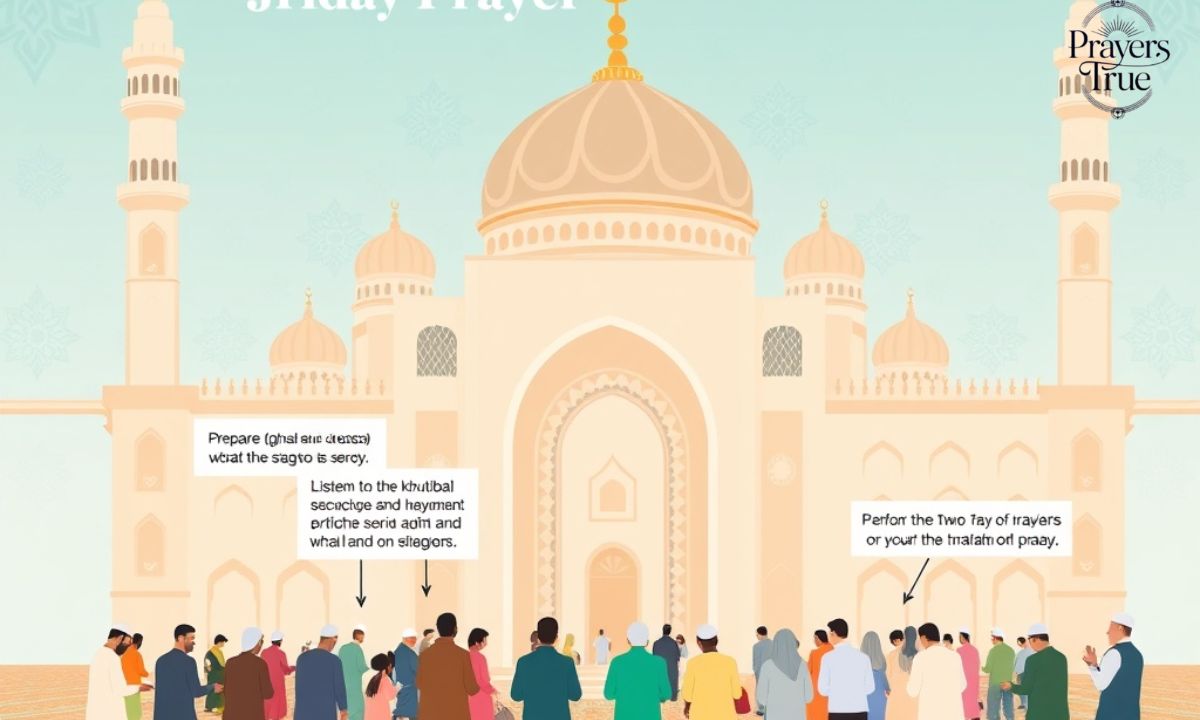
The Friday Prayer, known as Salat al-Jumu’ah, is a special weekly congregational prayer held every Friday in place of the regular Dhuhr prayer. It is an important act of worship in Islam that brings the Muslim community together in unity, reflection, and remembrance of Allah. Unlike the daily prayers, Jumu’ah includes a sermon (khutbah) delivered by the imam before the two obligatory rak‘ahs are performed in congregation.
Learning how to pray Jumu’ah properly helps you fulfill this obligation with sincerity and understanding. From preparing with ghusl (ritual purification) and arriving early at the mosque to listening attentively to the khutbah and praying behind the imam, each step carries spiritual reward. Jumu’ah is not just a prayer—it is a weekly opportunity to renew faith, seek forgiveness, and strengthen brotherhood within the Muslim community.
Preparing Your Heart for Jumu’ah

Begin your Friday with gratitude. Wake up acknowledging that Allah has granted you another Jumu’ah, a gift that millions who came before you will never receive again.
Make ghusl with intention. Let the act of purifying your body remind you that you are about to stand before the Most High, and prepare your soul with the same care you give your appearance.
Dress with honor and respect. Wear your best clothes not to impress those around you but as an outward expression of the reverence you carry in your heart for this blessed day.
Recite Surah Al-Kahf in the morning. Let its light accompany you throughout the day and illuminate your heart as you prepare to meet your brothers and sisters in worship.
Send abundant salawat upon the Prophet. Friday is the day of salawat and every blessing you send upon him returns to you multiplied, softening your heart before you enter the masjid.
Leave for Jumu’ah early. Do not treat the khutbah as an interruption to your day but as the most important appointment on your Friday, arriving with time to sit, reflect, and connect with Allah.
Silence your worldly concerns at the door. Leave your deadlines, your disputes, and your distractions outside the masjid and enter with a heart that is fully present and fully surrendered.
Listen to the khutbah with an open heart. The imam’s words are not merely a formality but a reminder from Allah, so receive them humbly and ask yourself what He is trying to tell you today.
Make sincere tawbah before you pray. Use the moments before the iqamah to quietly ask forgiveness for what has passed since the last Jumu’ah and approach the prayer with a clean and contrite heart.
Straighten your rows with love. When you stand shoulder to shoulder with your fellow Muslims, remember that this physical unity is a reflection of the brotherhood and sisterhood Allah has placed between you.
Pray your sunnah prayers with focus. Do not rush through the voluntary prayers before and after Jumu’ah but use them to warm your heart and deepen your connection to Allah.
Seek the blessed hour of dua. The Prophet told us there is a moment on Friday when no sincere dua is turned away, so keep your lips moving and your heart hopeful throughout the day.
Reflect on the khutbah after you leave. Do not let the imam’s words evaporate the moment you walk out the door but carry at least one reminder with you and let it shape how you live the rest of your week.
Make dua for the entire Ummah. Jumu’ah is not only a personal moment but a communal one, so lift your hands for Muslims everywhere who are suffering, struggling, and striving for Allah’s pleasure.
Avoid idle talk inside the masjid. Guard your tongue from unnecessary conversation before the khutbah and protect the sacred atmosphere that makes Jumu’ah different from every other gathering.
Bring a young one with you. If you have children or younger family members, take them to Jumu’ah and let them grow up knowing that Friday belongs to Allah before it belongs to anyone else.
Give in sadaqah on this blessed day. Even a small act of charity on Friday carries tremendous weight, so let your generosity be part of how you honor the day Allah has honored above all others.
Carry the peace of Jumu’ah into your home. Return to your family with a softened heart, a calm spirit, and the overflow of whatever closeness to Allah you found in the masjid today.
Make dhikr as the sun begins to set. As Friday draws to a close, keep your tongue moist with the remembrance of Allah and refuse to let the blessings of this day slip away without gratitude.
Ask Allah to accept it from you. After everything is done, the prayer, the khutbah, the dua, and the dhikr, end your Friday by humbly asking Allah to accept your worship, for it is His acceptance alone that makes it count. Amen.
Performing Ghusl and Wearing Clean Clothes
Begin with bismillah. Before you pour the first drop of water, invoke the name of Allah and let this simple word transform an ordinary act of washing into an act of worship.
Make your niyyah before you begin. Intention is the soul of every act in Islam, so before you step into ghusl, declare in your heart that you are purifying yourself for the sake of Allah alone.
Wash your hands three times first. Begin as the Prophet taught, cleansing your hands before they touch any other part of your body, honoring the sunnah in every small detail of the process.
Remove all impurities before the full wash. Take care to cleanse yourself thoroughly at the start so that the water of ghusl flows over a body that is already physically clean and ready to be spiritually renewed.
Let the water reach every part of your body. Ghusl is only valid when water touches every surface, so be thorough, be patient, and leave no area untouched by the purifying flow.
Rinse your mouth and nose with care. These often overlooked steps are part of the complete sunnah of ghusl, so do not rush past them but perform them with the same mindfulness as the rest.
Pour water over your head three times. Let it run down through your hair and over your entire body, symbolizing not just physical cleansing but a fresh beginning before your Lord.
Reflect on what you are washing away. As the water moves over you, let your heart release the weight of sin, distraction, and spiritual heaviness and emerge from ghusl feeling genuinely renewed.
Perform ghusl with calm and without haste. This is not a task to rush through before Friday but a sacred preparation, so give it the time and attention it deserves as an act of devotion.
Choose your clothes with the same intention. Getting dressed for Jumu’ah is not a worldly act but a spiritual one, so approach your wardrobe with the mindset of someone preparing to stand before Allah.
Wear white if you are able. The Prophet encouraged white garments for Jumu’ah and wearing them connects you to a beautiful sunnah while outwardly reflecting the purity you have just renewed inwardly.
Ensure your clothes are free from impurity. Check that what you wear is tahir in every way, because the cleanliness of your garment is an extension of the purity you worked to achieve in ghusl.
Apply pleasant fragrance before you leave. The Prophet loved good scent and wearing it on Jumu’ah is a sunnah that honors the day, the masjid, and the community of worshippers around you.
Let your appearance reflect your inner state. Dressing well for Jumu’ah is not vanity but a visible declaration that this day is different, that you have set it apart and given it your best.
Avoid extravagance in what you wear. There is a balance between honoring Allah with your appearance and falling into arrogance or showing off, so dress beautifully but keep your heart humble.
Teach your children to prepare the same way. When young ones see you performing ghusl and dressing intentionally for Jumu’ah, they learn that worship begins long before they enter the masjid.
Carry the feeling of cleanliness into your salah. The purity you achieved in ghusl is not just physical but a state of readiness, so let that freshness and lightness follow you all the way into your prayer.
Thank Allah for the ability to purify yourself. Not everyone has clean water, healthy bodies, or the knowledge of how to prepare for worship, so end your ghusl with a heart full of gratitude for the blessing of being able to come before Allah clean. Amen.
Arriving Early at the Masjid
Leave your home with the intention of worship. The journey to the masjid begins the moment you step out of your door, so let every step you take toward it be counted as an act of devotion.
Understand the reward of coming early. The Prophet told us that those who come in the first hour are like those who offer a camel for the sake of Allah, so let that reward motivate your feet to move quickly.
Make dhikr on your way to the masjid. Fill the walk or drive with the remembrance of Allah and arrive not just physically present but spiritually warmed up and ready to worship.
Enter with your right foot first. This small sunnah carries great meaning, so as you step through the door of the masjid, do so with intention and with the duaa of entering upon your lips.
Pray tahiyyatul masjid immediately. Before you sit, before you greet anyone, offer two rakaat to honor the house of Allah and establish your connection to this sacred space.
Choose a spot close to the front. Those who arrive early have the privilege of sitting near the imam, so take that blessed position and let it sharpen your focus and deepen your presence.
Use the waiting time for the Quran. Rather than scrolling through your phone or engaging in idle conversation, open the Book of Allah and let His words prepare your heart for what is coming.
Make abundant dua while you wait. The time between your arrival and the beginning of the khutbah is a golden window for supplication, so keep your hands and your heart raised toward Allah.
Observe the masjid filled with believers. As your brothers and sisters arrive, let the sight of the gathering Ummah fill you with love, gratitude, and a deep sense of belonging to something far greater than yourself.
Avoid reserving spots for others. Arrive early for yourself and encourage those you love to do the same, rather than saving rows and disrupting the order that Islam encourages in congregational worship.
Greet those around you with warmth. A genuine salam to those seated near you spreads the barakah of the gathering and fulfills the prophetic command to spread peace among the believers.
Sit with stillness and not restlessness. Arriving early is only fully rewarded when the time is spent in purposeful worship, so resist the urge to fidget, wander, or fill the silence with unnecessary talk.
Reflect on why this place is different. The masjid is the most beloved place on earth to Allah, so sitting within its walls even before the prayer begins is itself a privilege that deserves your full appreciation.
Send salawat upon the Prophet as you wait. There is no better way to fill the moments before Jumu’ah than by sending blessings upon the one who taught us the value of this blessed day.
Let the early arrival soften your heart. Rushing in at the last moment leaves no room for presence, but coming early gives you the gift of transition, moving slowly from the noise of the world into the stillness of worship.
Ask Allah to accept your effort. You woke up, you prepared, you arrived early, and you sat waiting for His remembrance, so before the khutbah begins, quietly ask Allah to look upon your effort with acceptance and mercy. Amen.
Offering Sunnah Prayers Before the Khutbah
Pray tahiyyatul masjid before you sit. The moment you enter the masjid, honor the house of Allah with two rakaat and let them be your greeting to a space that deserves more than a casual entrance.
Understand that these prayers are a gift. The sunnah prayers before the khutbah are not an obligation but an invitation, Allah is giving you extra moments to draw near to Him before the congregation begins.
Make your niyyah clear and sincere. Before you raise your hands to begin, settle your heart on why you are praying and dedicate every movement and recitation solely to the pleasure of Allah.
Pray them slowly and without rushing. The value of sunnah prayers is not in completing them quickly but in the quality of presence you bring to each bow, each prostration, and each word of remembrance.
Use these rakaat to transition from dunya to worship. Your mind may still be carrying the noise of the morning, so let the structure of these prayers gently pull your attention away from the world and fix it on Allah.
Recite with reflection and not just repetition. As you move through your recitation, let the words of the Quran land in your heart and not just leave your lips, allowing each verse to prepare you for the khutbah ahead.
Let your sujood be a moment of deep connection. The closest a servant comes to Allah is in prostration, so use every sujood in your sunnah prayers to whisper what your heart most needs to say.
Do not be distracted by those around you. The masjid may be filling with arrivals and greetings, but guard your prayer from distraction and give Allah the undivided attention these moments deserve.
Pray as though it may be your last salah. We are not promised another Jumu’ah, another masjid, or another moment of health and ability, so approach each rakaat with the weight and gratitude of someone who knows this is a privilege.
Follow the sunnah in the number of rakaat. The Prophet prayed as many as he was able before the khutbah, so offer what you can within the time available and let his example be your guide.
Let each prayer build upon the last. Rather than treating the sunnah rakaat as separate units, allow each one to carry you deeper into focus, so that by the time the khutbah begins your heart is fully present.
Make dua between your prayers. In the pauses between rakaat, lift your needs to Allah quietly and take full advantage of every unoccupied moment before the imam ascends the minbar.
Carry gratitude into every movement. The standing, the bowing, the prostrating, each position is a physical expression of surrender, so let your body mean what it is saying before your Lord.
Do not abandon these prayers out of laziness. Shaytan works hardest on Jumu’ah to keep believers from maximizing the day, so recognize every whisper of reluctance for what it is and pray anyway.
End with a heart prepared to receive. The entire purpose of these sunnah prayers is to make you ready, so as you complete your final rakaat and the khutbah is about to begin, check your heart and ask Allah to open it fully to whatever He has prepared for you today. Amen.
Listening Attentively to the Khutbah
Silence everything the moment the imam ascends. The Prophet told us that even saying hush to another person during the khutbah nullifies your reward, so let that truth be enough to still your tongue completely.
Remind yourself that this is not a lecture but a reminder from Allah. The imam is a vessel and the words being spoken are an invitation from your Lord to reflect, repent, and return to what matters most.
Push away every wandering thought with intention. Your mind will try to drift to your to-do list, your lunch, and your afternoon plans, so each time it wanders gently bring it back and refuse to let the dunya steal this time from you.
Look toward the imam with focused eyes. Where your gaze goes your attention tends to follow, so face the minbar, settle your posture, and let your body language reflect the seriousness with which you are receiving these words.
Ask Allah to open your heart before the khutbah begins. A locked heart cannot receive what Allah is sending, so make a quiet dua in those final moments asking Him to soften you and make you ready to be moved.
Listen for the one thing Allah wants you to hear today. Every khutbah carries a message that may land differently in every heart, so listen not just with your ears but with a spirit that is searching for its personal reminder.
Do not judge the delivery but absorb the content. It is easy to be distracted by the imam’s style, pace, or accent, but the believer who listens past the vessel to the message is the one who walks away transformed.
Let the Quranic verses land deeply. When the imam recites from the Book of Allah, give those moments extra weight and let the words of the Quran penetrate in a way that ordinary speech never could.
Resist the urge to interact with those beside you. A whisper, a smile, a nudge, all of it breaks the sanctity of the khutbah, so honor the moment by being fully present rather than socially engaged.
Take one lesson and commit to acting on it. The khutbah is not meant to fill your head with knowledge but to change your behavior, so identify one thing you will do differently before next Jumu’ah and hold yourself to it.
Remember those who have no access to this reminder. Muslims in prisons, in hospitals, in war zones, and in places with no masjid would give anything to sit where you are sitting, so listen on their behalf with double the gratitude.
Do not let the khutbah end without making dua. As the imam concludes and raises his hands, raise yours with a heart full of everything you heard and everything you need, trusting that Allah is listening as attentively to you as you were to His reminder.
Carry the khutbah out of the masjid with you. The measure of how well you listened is not what you remember on Friday afternoon but what is still shaping your choices by the following Thursday. Amen.
Performing the Two Rak’ahs of Jumu’ah Prayer

Stand with the awareness that this moment is unlike any other. The two rak’ahs of Jumu’ah are not simply a replacement for Dhuhr but a unique act of worship that Allah has made obligatory for every believing man, so rise for them with that weight in your heart.
Make your niyyah firm before the takbeer. As the imam calls Allahu Akbar and you raise your hands, let your intention be clear, your heart be present, and your entire being be directed toward the One you are standing before.
Follow the imam without hesitation or delay. Jumu’ah prayer is a congregational act and its beauty lies in the unity of the rows, so move with the imam in perfect sync and let the harmony of the congregation be a reflection of the Ummah’s oneness.
Listen to the imam’s recitation with a present heart. During the first and second rak’ah the imam recites aloud, so close your eyes if it helps, follow the words of the Quran, and let each verse deepen your connection to Allah.
Let your ruku be full of glorification. As you bow, fill the position with subhana rabbiyal adheem and mean every word, recognizing that you are bending before the Lord of all that exists.
Make your sujood the peak of your prayer. Lower yourself to the ground knowing that this is the closest you will come to Allah in this entire act of worship, so do not rush through it but linger, surrender, and speak from the deepest part of your heart.
Sit in tashahhud with complete stillness. This seated testimony is your declaration that there is none worthy of worship but Allah and that Muhammad is His messenger, so recite it slowly and let every word carry its full and sacred meaning.
Send salawat upon the Prophet with love. As you reach the Ibrahimiyyah salawat in your final sitting, remember that you are sending blessings upon the man who carried this deen to you across fourteen centuries of sacrifice.
Make your final dua before the tasleem. In those last quiet moments before you turn your head to give salam, bring everything before Allah, your fears, your needs, your family, your sins, and trust that He hears every word.
Leave the prayer different from how you entered it. The two rak’ahs of Jumu’ah are not a formality to be checked off but a transformation to be experienced, so as you say your final salam ask yourself what has changed within you and carry that change all the way through your week. Amen.
Making Du’a in the Blessed Hour
Know that this hour is real and do not waste it. The Prophet confirmed that there is a blessed hour on Friday when no sincere du’a is rejected, so approach it not with casual words but with the full weight of a heart that truly believes Allah is listening.
Seek it in the last hour before Maghrib. The strongest opinion among scholars places the blessed hour in the final stretch of Friday afternoon, so as the sun begins its descent make that window a time of devoted and uninterrupted supplication.
Come with a prepared heart and not just a prepared list. Before you raise your hands, sit quietly for a moment, release the tension of the day, and let your heart soften into the kind of humility that moves the mercy of Allah.
Ask for both the dunya and the akhirah. Allah is not limited in what He can give so do not limit yourself in what you ask, bring your worldly needs and your eternal hopes before Him and trust that He is capable of answering every single one.
Pray for the Ummah before you pray for yourself. Begin your du’a by lifting the condition of Muslims around the world and watch how that selfless opening softens your heart and expands the sincerity of everything that follows.
Be specific and be honest. Allah already knows what you need but speaking it clearly in du’a is an act of trust and vulnerability, so name your struggles, name your fears, and name the exact doors you are asking Him to open.
Do not let impatience cut your du’a short. The blessed hour is a gift of time so use all of it, resist the urge to rush and keep your hands raised and your lips moving long past the point where it feels comfortable.
Repeat your most important requests. The Prophet taught us that Allah loves those who are persistent in du’a, so do not ask once and move on but return to your greatest needs again and again with the confidence of a child who trusts their father completely.
End with gratitude and full surrender. After you have poured everything out before Allah, close your du’a by thanking Him for hearing you, trusting Him with the outcome, and releasing every request into the hands of the One who has never once failed to do what is best for those who love Him. Amen.
Leaving with Gratitude and Continuing Good Deeds

Walk out of the masjid as a changed person. Do not let Jumu’ah be something that happened to you but something that transformed you, carrying its light into every interaction, decision, and moment that follows.
Thank Allah before you reach the door. As you prepare to step back into the world, pause for just a moment and offer a sincere word of gratitude to the One who gave you health, time, and the ability to worship on this blessed day.
Carry the peace of the prayer into your home. Return to your family not with the stress of traffic or the hunger of the afternoon but with the overflow of whatever stillness and closeness to Allah you found inside those walls.
Let the khutbah change at least one habit this week. Gratitude for Jumu’ah is not just felt in the heart but proven in life, so identify one thing you heard today and let it visibly reshape how you live before the next Friday arrives.
Follow the Jumu’ah prayer with voluntary good deeds. Visit someone who is lonely, give in charity, call a family member you have neglected, or simply smile at a stranger, and let the barakah of this day multiply through every act of goodness you attach to it.
Make dhikr as you move through the rest of your Friday. Keep your tongue moist with the remembrance of Allah long after the masjid empties and refuse to let the world pull you so completely back that the spiritual momentum of Jumu’ah is gone before sunset.
Treat those around you with the gentleness of someone who just stood before Allah. The truest sign that your worship was accepted is not how you felt in the prayer but how you treat people in the hour immediately after it.
Ask Allah to seal this Friday with His acceptance. Before the day fully closes and the night of Saturday begins, raise your hands one final time and ask the One who gave you this Jumu’ah to accept every prayer, every tear, every moment of sincerity, and to write you among those whose Friday was not wasted. Amen.
Frequently Asked Questions
Is Friday Prayer (Jum’a) obligatory for everyone?
Jum’a prayer is obligatory for adult Muslim men who are residents and able to attend. It is not mandatory for women, children, travelers, or those who are ill, though women may attend if they wish.
How many rak‘ahs are prayed in Jum’a?
The obligatory Friday prayer consists of two rak‘ahs prayed in congregation after the khutbah (sermon). Many people also pray Sunnah rak‘ahs before and after, following the practice of the Prophet ﷺ.
What happens if someone misses Jum’a prayer?
If a person misses the Friday prayer without a valid excuse, they should repent and pray four rak‘ahs of Dhuhr instead. Regularly neglecting Jum’a without reason is considered a serious matter in Islam.
Is listening to the khutbah necessary?
Yes, listening attentively to the khutbah is required. Talking, using the phone, or distracting others during the sermon reduces the reward of Jum’a.
Can Jum’a be prayed at home?
Jum’a must be performed in congregation at a mosque or designated place. If someone cannot attend due to illness or a valid reason, they should pray Dhuhr at home instead.
What should be done before attending Jum’a?
It is recommended to perform ghusl (ritual bath), wear clean clothes, apply perfume (for men), recite Surah Al-Kahf, and send blessings upon the Prophet ﷺ. Arriving early to the mosque also brings great reward.
Is the Friday Prayer mentioned in the Qur’an?
Yes, Allah commands believers in Surah Al-Jumu’ah (62:9) to leave trade and hasten to the remembrance of Allah when the call to Friday prayer is announced.
Can women attend Jum’a prayer?
Yes, women are allowed to attend the Friday prayer at the mosque, but it is not obligatory for them. If they do not attend, they simply pray Dhuhr at home.
Conclusion
The Friday Prayer (Jum’a) is more than a weekly obligation—it is a powerful reminder of faith, unity, and devotion. Gathering with fellow Muslims, listening to the khutbah, and standing together in prayer strengthens both personal spirituality and community bonds. It is a sacred pause in the busy week, calling believers back to remembrance of Allah.
By preparing properly, attending with sincerity, and listening attentively, you can gain the full blessings of this special day. May every Jum’a be a source of forgiveness, renewal, and increased closeness to Allah.

Riya is a passionate writer with 4 years of experience creating inspiring prayer blogs. She currently works at PrayersTrue.com, sharing heartfelt words that bring peace, hope, and spiritual strength to readers worldwide.