
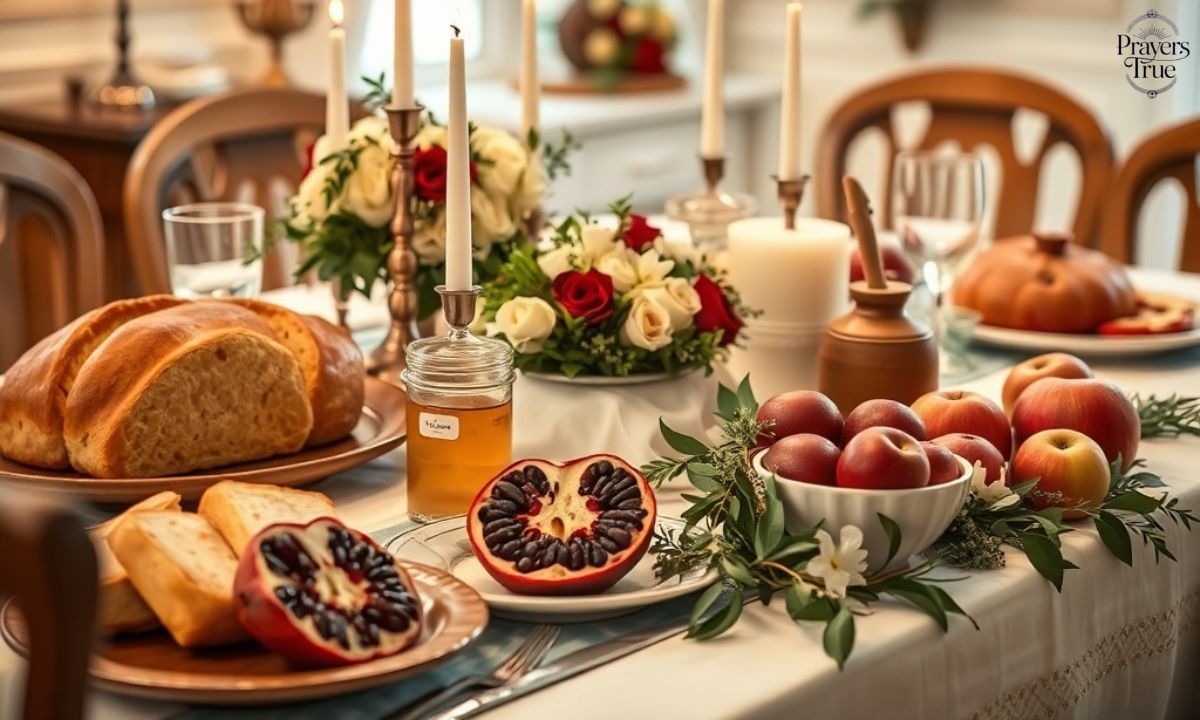
Rosh Hashanah, the Jewish New Year, is a sacred and joyful time that brings families and communities together around the table and in prayer. More than just a festive meal, the Rosh Hashanah dinner is filled with deep symbolism—from sweet apples dipped in honey to the round challah that represents the cycle of life and renewal. Each dish tells a story of hope, blessing, and the desire for a sweet year ahead, making the table a place where tradition, gratitude, and togetherness beautifully meet.
Alongside the dinner, the prayers of Rosh Hashanah invite reflection, repentance, and renewal of the heart. These prayers help set the tone for the year to come, encouraging people to look inward, seek forgiveness, and strengthen their connection with God and with one another. Together, the dinner and the prayers create a meaningful start to the New Year—one rooted in faith, remembrance, and hopeful new beginnings. ✨
Candles

We kindle these lights to welcome the sacred day.
As we light the Shabbat candles, we pause at the threshold between the ordinary week and sacred time. This ancient ritual, traditionally performed eighteen minutes before sunset, fills our homes with both physical and spiritual light. We cover our eyes as we recite the blessing, allowing ourselves to fully absorb the transformation taking place. The flickering flames remind us to slow down, to disconnect from the demands of daily life, and to reconnect with what truly matters. In this moment of illumination, we invoke blessing upon our households and loved ones, creating a sanctuary of peace that will carry us through the day of rest ahead.
Baruch atah Adonai, Eloheinu melech ha’olam, asher kid’shanu b’mitzvotav v’tzivanu l’hadlik ner shel Shabbat.
Blessed are You, Lord our God, Ruler of the universe, who has sanctified us with Your commandments and commanded us to kindle the Shabbat light.
Kiddush
We sanctify this day over wine, declaring its holiness.
The Kiddush elevates an ordinary cup of wine into a vessel of sanctification, marking Shabbat as distinct from all other days. Standing together around the table, we lift our cups and proclaim the holiness of this time, echoing the ancient words that have been recited in Jewish homes for millennia. This blessing connects us to the story of creation itself, reminding us that God rested on the seventh day and calls us to do the same. Through Kiddush, we acknowledge that some moments are set apart, deserving of special recognition and gratitude. The sweet taste of the wine mirrors the sweetness of Shabbat itself, a gift of rest, joy, and spiritual renewal that nourishes our souls as we gather with those we love.
Baruch atah Adonai, Eloheinu melech ha’olam, borei p’ri hagafen.
Blessed are You, Lord our God, Ruler of the universe, who creates the fruit of the vine.
New Fruit

We celebrate the season’s first taste with gratitude and wonder.
When we encounter a fruit for the first time in its season, Jewish tradition invites us to pause and offer the Shehecheyanu blessing, a prayer of profound gratitude for reaching this moment. This beautiful practice transforms a simple act of eating into an opportunity for mindfulness and appreciation. Whether it’s biting into the first crisp apple of autumn, savoring summer’s initial strawberry, or tasting a pomegranate as Rosh Hashanah approaches, we acknowledge that each season brings its own blessings and each moment is unique. This prayer reminds us not to take life’s pleasures for granted, but to recognize the divine hand in the cycles of nature and the gift of being alive to experience them. In expressing thanks for “keeping us alive, sustaining us, and bringing us to this season,” we cultivate joy in the everyday miracles that surround us.
Baruch atah Adonai, Eloheinu melech ha’olam, shehecheyanu, v’kiy’manu, v’higiyanu laz’man hazeh.
Blessed are You, Lord our God, Ruler of the universe, who has kept us alive, sustained us, and brought us to this season.
Challah in Honey
We dip our bread in sweetness, blessing the year ahead.
During Rosh Hashanah and the High Holy Days, we embrace the beautiful custom of dipping challah in honey rather than salt, symbolizing our hopes for a sweet new year. This simple act carries profound meaning as we stand at the threshold of a fresh beginning. The golden honey glistening on the soft, braided bread represents our prayers for health, happiness, and blessing in the months to come. Before taking that first honeyed bite, we recite the traditional blessing over bread, but the honey adds an extra layer of intention and hope to our prayer. This practice connects us to generations past who have shared this same wish for sweetness, and reminds us that we have the power to create goodness in our lives and in the world around us. As the honey touches our lips, we taste the potential of the new year—rich, nourishing, and sweet.
Baruch atah Adonai, Eloheinu melech ha’olam, hamotzi lechem min ha’aretz.
Blessed are You, Lord our God, Ruler of the universe, who brings forth bread from the earth.
Symbolic Foods

Each bite carries meaning, each taste tells a story.
The table on Rosh Hashanah becomes a canvas of hope and intention, adorned with symbolic foods that speak the language of prayer through taste and tradition. From the sweetness of apples dipped in honey to the abundance represented by pomegranate seeds, each food is carefully chosen to express our deepest wishes for the year ahead. We eat dates (tamar) that our enemies may be consumed, leeks (karti) that those who wish us harm may be cut off, and the head of a fish that we may be leaders rather than followers. These symbolic foods, known as simanim, transform our meal into a spiritual experience, where every flavor becomes a blessing and every dish a declaration of faith. As we taste each food and recite its corresponding prayer, we engage all our senses in the sacred work of setting intentions, invoking blessings, and declaring our hopes for a year filled with goodness, prosperity, and peace.
Yehi ratzon milfanecha, Adonai Eloheinu v’Elohei avoteinu, she’titchadesh aleinu shanah tovah u’metukah.
May it be Your will, Lord our God and God of our ancestors, that You renew for us a good and sweet year.
Rosh Hashanah Cuisine

Our holiday table reflects the abundance we pray to receive.
The culinary traditions of Rosh Hashanah weave together centuries of Jewish culture, regional influences, and spiritual significance into a feast that delights both body and soul. Beyond the symbolic foods, our tables overflow with dishes that have been passed down through generations—rich tzimmes studded with carrots and sweet potatoes, tender brisket braised to perfection, golden chicken soup that warms the heart, and round challahs that symbolize the cyclical nature of the year. Ashkenazi families might serve kreplach and kugel, while Sephardic tables feature fragrant rice dishes, stuffed vegetables, and aromatic stews. The abundance itself is meaningful, representing our gratitude for past blessings and our hopes for continued prosperity. As family and friends gather around these laden tables, sharing stories and laughter alongside traditional recipes, we create memories that become part of our own family’s narrative, ensuring that these tastes and traditions will nourish future generations as they have nourished us.
Baruch atah Adonai, Eloheinu melech ha’olam, shehakol nihyeh bidvaro.
Blessed are You, Lord our God, Ruler of the universe, by whose word all things came to be.
Frequently Asked Questions
What is Rosh Hashanah and why is it important?
Rosh Hashanah is the Jewish New Year and one of the holiest days in the Jewish calendar. It marks the beginning of a new year and a time for reflection, repentance, and renewal. People focus on improving themselves, seeking forgiveness, and starting the year with hope and faith.
What foods are traditionally served at a Rosh Hashanah dinner?
Common foods include apples dipped in honey for a sweet new year, round challah bread symbolizing the cycle of life, pomegranates, dates, and other symbolic dishes. Each food represents blessings, abundance, and good wishes for the year ahead.
Why do people dip apples in honey on Rosh Hashanah?
Dipping apples in honey symbolizes the hope for a sweet and good year. It is one of the most well-known traditions of Rosh Hashanah and is usually accompanied by a short blessing.
What are the main prayers said on Rosh Hashanah?
The prayers focus on God’s kingship, remembrance, and repentance. Special synagogue services include the blowing of the shofar (ram’s horn), which calls people to reflect, repent, and spiritually awaken for the new year.
What is the shofar and why is it blown?
The shofar is a ram’s horn that is blown during Rosh Hashanah services. Its sound serves as a spiritual wake-up call, reminding people to reflect on their actions, seek forgiveness, and return to a better path.
Can Rosh Hashanah be celebrated at home?
Yes, many families celebrate Rosh Hashanah at home with a festive dinner, blessings over symbolic foods, and prayers. While synagogue services are important, home celebrations also play a big role in the holiday.
How long does Rosh Hashanah last?
Rosh Hashanah is celebrated for two days. During this time, people attend prayer services, share festive meals, and focus on spiritual reflection and renewal.
What is the meaning of repentance during Rosh Hashanah?
Repentance means recognizing mistakes, asking for forgiveness, and committing to do better in the future. Rosh Hashanah begins a period of self-examination that leads up to Yom Kippur, the Day of Atonement.
What should guests know when attending a Rosh Hashanah dinner?
Guests should expect a meaningful, tradition-filled meal with blessings and symbolic foods. It’s respectful to dress modestly, participate in the rituals if invited, and share in the spirit of gratitude and hope for the new year.
How do Rosh Hashanah prayers set the tone for the new year?
The prayers encourage reflection, humility, and hope. They help people focus on spiritual growth, repairing relationships, and starting the year with a renewed sense of purpose and faith.
Conclusion
Rosh Hashanah dinner brings family and friends together to celebrate tradition, blessings, and the hope for a sweet new year. Symbolic foods like apples with honey and round challah make the meal meaningful and joyful.
The prayers and the blowing of the shofar guide reflection, repentance, and renewal. Together, the dinner and prayers inspire gratitude, faith, and a fresh start for the year ahead. 🌟

Riya is a passionate writer with 4 years of experience creating inspiring prayer blogs. She currently works at PrayersTrue.com, sharing heartfelt words that bring peace, hope, and spiritual strength to readers worldwide.